





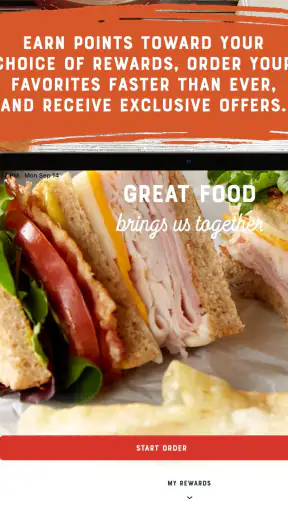
I found McAlister's Deli most useful when I treated it as a quick bridge between deciding what to eat and actually placing a deli order. It is a free lifestyle app from McAlister’s Deli, built around browsing favorites, ordering, and rewards rather than trying to become a general food-discovery service. That focus makes it easy to understand, but it also means the quality of the experience depends heavily on your connection, the selected restaurant, and how much you already know about what you want.
After spending time with it, my overall impression is positive. The layout is aimed at getting you from menu to checkout without much wandering, and the rewards element gives regular customers a reason to keep using the app instead of ordering as a guest every time. It is available to everyone, costs nothing to download, and has reached more than a million installs. Its average rating sits at 4.7 from roughly 29 thousand ratings, which matches my feeling that the core experience is dependable for routine orders, even though it is not completely free from small points of friction.
How connection changes the ordering experience
The app is strongest when the network is stable
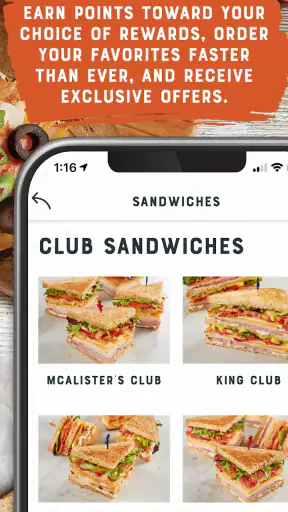
The most important thing to understand is that this is a connected ordering tool. Menus, restaurant availability, account details, rewards information, and checkout all need current information to be useful. When I had a reliable connection, the flow felt straightforward: open the app, choose a location, inspect the menu, customize the order where available, and move toward pickup or the relevant ordering option. The benefit is not simply that the menu is on a phone. It is that the app can present the restaurant context needed to make the order practical.
That network dependence is easy to overlook because the interface itself feels simple. A menu may load quickly, yet the next step can still depend on a fresh response from the selected location. This matters when you are in a parking lot, inside a busy shopping area, or moving between Wi-Fi and mobile data. I would not open it for the first time while already standing in a crowded line and expect everything to be effortless. Choosing the restaurant and building the order before the rush gives the app a much better chance to help.
There is also a useful distinction between browsing and committing. Looking through choices can feel casual, but selecting a location and sending an order is more sensitive to changing information. A restaurant may be the wrong branch, a pickup choice may need to be confirmed again, or the final screen may take longer than the menu. My practical advice is to pause on the final review screen and make sure the location, items, and order timing still match your intention before submitting.
A realistic lunch scenario
Imagine leaving work with only a short break. I would open the app before walking out, select the McAlister’s location closest to the destination rather than automatically relying on the last restaurant used, and build the order while still on a strong office connection. That small habit reduces the chance of trying to load the menu in a weak signal area. It also gives me time to check the order carefully instead of making a rushed decision at the counter.
If I were ordering for two people, I would use the review stage as a checklist rather than assuming the app has remembered every preference correctly. I would confirm the restaurant, read the item names again, check customizations, and only then continue. This is one of the less obvious strengths of a mobile ordering workflow: it gives me a quieter moment to catch mistakes that are easier to make when speaking quickly at a busy register.
For a familiar solo order, the process is quicker. I can use the app as a repeatable routine, especially if the rewards area is part of my normal visits. For a first-time customer, however, the app does not remove the need to understand the menu. It helps organize the order, but it is not a substitute for reading descriptions or thinking through what is suitable for the people eating.
What mobile use gets right
The phone format makes the app particularly convenient for people who already know when and where they want to eat. I can make a choice while commuting, during a work break, or before reaching the restaurant. That is more comfortable than waiting at a counter while deciding, and it separates menu browsing from the pressure of a line. The rewards function also makes more sense on a phone than on a paper receipt because it keeps the customer account close to the ordering process.
I think the app is best for repeat visits, planned pickup, and customers who want to keep their ordering history and rewards activity in one place. It is less compelling for someone who visits McAlister’s only once, wants to compare several nearby restaurants, or prefers to speak with staff about every part of an order. In those cases, the regular website or in-person ordering may be more comfortable, depending on the situation.
There is a trade-off in using a dedicated restaurant app. The experience can be more focused than a broad delivery marketplace, but it is tied to one brand. I do not get the same cross-restaurant comparison that a delivery service provides, and I should not expect the app to solve questions that require human conversation. Its advantage is directness, not variety.
When the signal becomes the problem
Weak connectivity changes the experience in ways that are easy to notice at the worst possible time. A menu can appear to be available while a location choice or checkout action is still waiting for current information. If a screen seems stuck, I would avoid repeatedly tapping the final order button. Repeated attempts can create uncertainty about whether anything was submitted, especially when the interface does not immediately make the result obvious.
My preferred recovery routine is simple. I first check whether the selected restaurant and order details are still visible. If the app returns to an earlier step, I review the cart before doing anything else. If the connection changes from Wi-Fi to mobile data, I give the screen a moment to refresh rather than rapidly switching between pages. When the order status is unclear, I would verify the result inside the app and, if necessary, contact the restaurant directly rather than assuming a second submission is harmless.
This is where the app feels less forgiving than a face-to-face order. At a counter, a staff member can tell me immediately whether the request was heard. In the app, I have to interpret what the current screen means. That is not a reason to avoid it, but it is a reason to order a little earlier when timing matters. I would not make a connection-sensitive order moments before a hard deadline.
Recovery habits that save time
One useful habit is to separate preparation from submission. I can browse and assemble choices when I have a good connection, then review everything before sending the order. Another is to avoid changing the selected restaurant casually after building a cart. Even when the app makes location changes possible, switching branches can affect what I see and may require another refresh. Starting with the correct location is usually safer than correcting it at the end.
I also recommend keeping the app updated through the normal app-store process. The current version is 8.6, and the application requires at least iOS 11. That makes device compatibility an important first check for anyone using an older iPhone. A phone that cannot meet the minimum system requirement is not going to benefit from troubleshooting the connection or reinstalling the app.
Reinstalling should be a later step, not the first reaction to a slow screen. A connection change, an incorrect location, or an interrupted checkout can look like an app fault even when the underlying issue is temporary. I would first reopen the relevant screen, confirm the cart, and retry only when I understand what happened. This cautious approach is especially important when rewards or an order confirmation are involved.
Using it without wasting mobile data
The app is not something I would worry about using briefly on mobile data, but a data-conscious routine still makes sense. I can use Wi-Fi to browse the menu and prepare a larger order, then rely on mobile data only for the final checks when I am away from home or work. The point is not that every action consumes a meaningful amount of data; it is that a stable connection is more valuable than constantly refreshing screens while moving around.
I would also avoid repeatedly reopening the same menu just because I am undecided. That creates a less efficient workflow and does not improve the decision. Instead, I would note what I am considering, make the selection once, and use the review screen to verify it. If I am comparing options for a group, doing that comparison before leaving a strong Wi-Fi connection is more comfortable than trying to do it in a crowded restaurant.
People who are especially careful with data should remember that the app’s useful information is connected to a live restaurant experience. This is not a static digital menu that I can treat as permanently self-contained. I would plan around having service when I need to select a location, update an order, or confirm the result. That expectation prevents a lot of frustration.
Rewards are valuable only if the routine fits
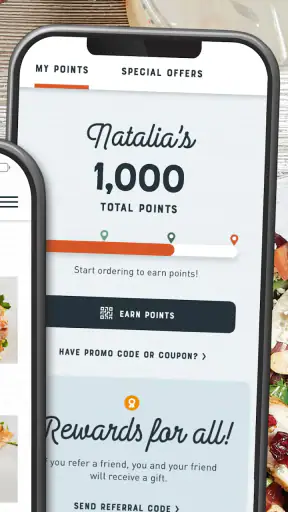
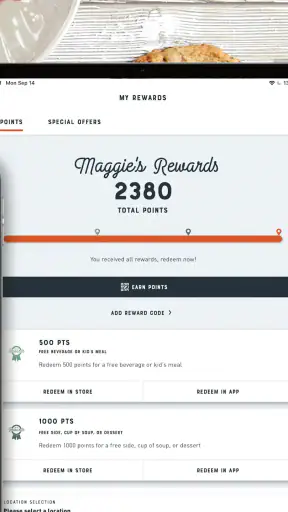
The rewards feature is one of the better reasons for a regular McAlister’s customer to use the app. Keeping rewards close to ordering can make repeat visits feel more organized than relying on memory or separate paperwork. Still, I would not choose the app solely because rewards exist. The value depends on whether I visit often enough to care, whether I remember to use the same account, and whether the ordering process remains convenient for my habits.
A practical approach is to sign in before I am ready to place an important order, not while standing at the final step. That gives me time to resolve account friction before food and timing become urgent. I would also check that the account shown in the app is the one I intend to use, particularly if more than one person in a household orders from the same device.
This is a subtle trade-off: account-based convenience can make repeat ordering easier, but it introduces another point to verify. If I only want a quick one-off purchase and do not care about rewards, ordering through a familiar alternative may be faster. If I visit regularly, the account and rewards workflow become more worthwhile.
Who should use it and who should skip it
I would recommend McAlister’s Deli to regular customers who like planning pickup orders, want a focused menu experience, and are comfortable handling the process on a phone. It is also a good fit for people who prefer reviewing an order visually rather than explaining every item at a counter. The free price removes an obvious barrier, and the Everyone age rating makes it broadly accessible as a consumer app.
I would be more cautious about recommending it to someone with an older iPhone that does not meet the iOS 11 requirement, someone with unreliable connectivity during the times they usually order, or someone who wants one app to compare many restaurants. It is also not my first choice when an order involves complicated questions that are easier to resolve through direct staff assistance.
The app has been available since December 28, 2016, and the developer is McAlister’s Deli. That history and its broad adoption suggest a mature tool rather than a brand-new experiment, but maturity does not change its basic role. It remains a restaurant-specific ordering companion, not a universal food-planning platform.
My connectivity verdict
After using it with connectivity in mind, I see McAlister’s Deli as a convenient option when I prepare a little and keep the order tied to the correct restaurant. Its strongest moments happen before I arrive: browsing on a reliable connection, building a familiar order, checking the details, and using the rewards account as part of a repeat routine. Those steps turn a potentially rushed purchase into a calmer one.
The main weakness is not that the app is difficult to understand. It is that a simple-looking order still depends on live information at several points. Weak service, a last-minute restaurant change, or uncertainty about whether a submission went through can make the experience less reassuring than ordering in person. I can reduce those problems by ordering earlier, avoiding repeated taps, and checking the final result carefully.
My final recommendation is straightforward: use it if McAlister’s is already part of your routine and you value direct mobile ordering with rewards. Keep an in-person or browser-based alternative in mind when your connection is poor, your device is old, or you need conversation more than speed. For the right customer, the best feature is the reduction of small ordering decisions during a busy day. It does not replace judgment, but with a stable connection and a careful final review, it makes a regular deli visit noticeably easier.


